Sunday, February 10, 2019

How an HVAC Contractor Could Help With Your Seasonal Allergies

What About Air Conditioning and Allergies?

It gets hot early in New Orleans. You switch on the a/c system and find yourself and also those around you sneezing. I can’t be allergic to the air conditioning system, can I? After considering the ac system allergic reaction theory, you move onto chalking it up to something more possible such as, seasonal allergies. You may not be entirely correct with your medical diagnoses, however you could be on the right track.
Your cooling system as well as seasonal allergic reactions might both be contributing in what you perceive as an ac system allergy. It’s not that you are allergic to your a/c unit, it’s that you are allergic to the impurities that are being pushed through it, which can include seasonal allergens and various other not-so-nice stuff. The following pollutants might be targeted for your ac unit allergy:

Pollen in HVAC systemPlant pollen

Plant pollen often enters your living/work space through open doors as well as windows, yet can be tracked within on shoes as well as apparel. Consequently, pollen can become embedded in carpets as well as furniture, which contributes to seasonal allergic reactions. Numerous allergists suggest cooling as a means to filter plant pollen from the air. If you reside in a city that is not specifically bursting with plants, your a/c allergy may be triggered by various other allergens.

Animal Dander

According to the Asthma and Allergy Foundation of America, as numerous as 3 in 10 people with allergic reactions have allergic reactions to felines and also canines in the USA. The majority of us enjoy our pets as well as would only give them up for fostering as a last option if a person in our house or business was allergic to pet dander. We ‘d likely search for various other remedies.
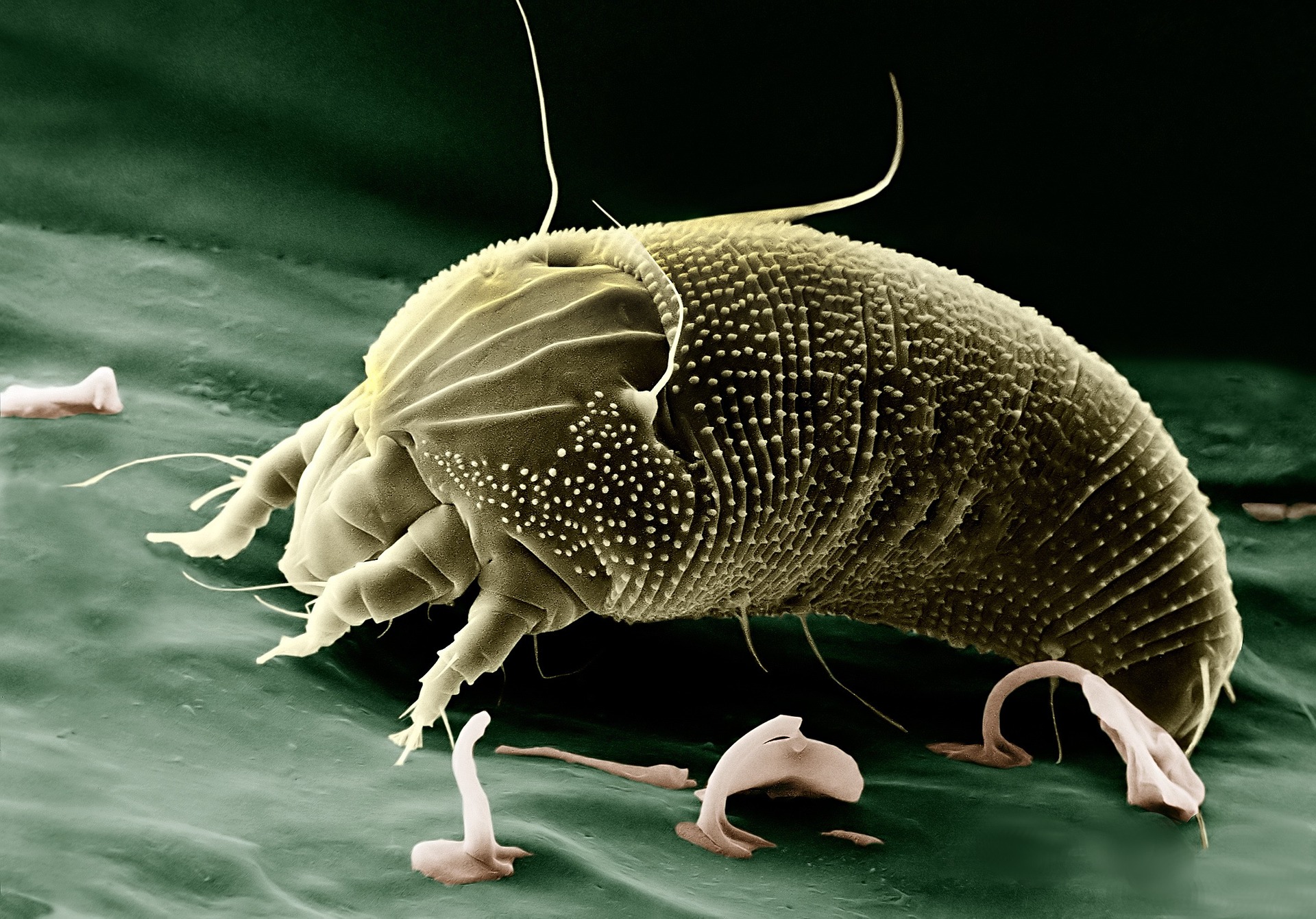
Dust mites in HVAC system
Dust Mites/Allergens

Whether your home or job area lies in the city or suburb, it is almost impossible to keep it clear of dust mites or allergens, no matter just how fastidious you are with keeping the area clean. Like some pollen, dust mites/allergens are fairly large bits and the larger the fragment, the quicker they will certainly settle from the air to a surface, that makes these two irritants a more usual and consistent issue and also regular reason for an ac unit allergic reaction.

Mold and Mildew

Mold and mildew, a fungi born in damp areas, could be the reason for your a/c unit allergic reaction. Many types of mold and mildew can cause allergies in a wide variety of individuals and especially allergic reaction patients, the young and also the elderly. Mold and mildew grow under wet conditions, including humidity, (not in New Orleans right?), and also water leakages which could be occurring with an overlooked a/c system.

Viruses in HVAC systemBacteria and Viruses

Your ac unit could be blowing more than good air. If germs and also viruses have penetrated your system, they can be distributed throughout your interior area by means of HVAC air ducts. Left unattended, it can result in Sick Building Syndrome, when your building’s occupants start complaining or voicing their concerns about a variety of wellness problems, but do not have a specific health problem such as the flu.

Pollution

If you live or work in a medium to large city like the Greater New Orleans Metro Area, you probably believe you’re secure from smoke or other outside pollutants behind the walls of your living or work area. Facts are that the EPA (Environmental Protection Agency) has determined that the air inside can be at minimum 2 to 5 times more contaminated than outdoors! So, outside toxins can be creeping right into your interior area and can be contributors to your a/c allergy problem.

Volatile Organic Compounds (VOCs) and Chemicals

VOCs as well as chemically induced allergic reactions in your work environment from a selection of cleaning supplies and various other products could be the source of air conditioner allergy problems.

VOCs are gases given off by a selection of common products. Though ozone is usually thought of as a gaseous layer in the upper atmosphere, which is dangerous to air quality, ozone is emitted by normal supplies and also equipment located in residences and also workplaces such as printers, adhesives and permanent markers and pens. You may associate an additional VOC, formaldehyde, with scientific research lab experiments. Nonetheless, formaldehyde and also various other VOCs are emitted by things like cleaning supplies, paint, chemicals, gas, cigarette smoke as well as furnishings and carpets.

Exactly how do all these pollutants find their way right into my breathing space?

Moisture is possibly the most prevalent promoters of your HVAC system creating pollutants. This begs the question– Where does the excess humidity originated from? You could have an oversized ac unit. If your air conditioning system is too powerful, it will cycle on and off often and not remain on long enough to get rid of moisture from the air. High humidity can likewise be brought on by inadequate ventilation. A competent New Orleans HVAC Contractor can fix this problem by re-directing duct work or adding makeup air.

You may have neglected maintenance, which could mean your system is operating inefficiently. When your system’s evaporator and also condenser coils are unclean, it might hinder the transfer of warmth, which will certainly cause ineffectiveness and also a struggle to eliminate moisture from the air. Coil cleaning and various other preventative maintenance work becomes part of many service contracts with Heating and Cooling specialists. Purchasing a comprehensive HVAC tune-up could help to prevent an air conditioning system allergy problem before it starts.

Air Conditioner Allergy Prevention Techniques

Installing the proper filters and changing them on a prompt basis is a key part of combating an ac system allergy issue. If you’re like most individuals, you possibly think that your system’s air filter needs to be adequate to prevent an a/c allergic reaction The desired objective of the filter is to keep dust off your cooling devices to preserve efficient operation.
While common paper filters help eliminate dust from the air, there are much better choices to remove the small particles that are the cause for an ac unit allergy. HEPA (High Energy Particulate Air) filters are designed to trap smaller sized bits such as bacteria, mold and smaller sized stains of plant pollen. HEPA filters consist of largely packed glass fiber layers rather than paper and also the top ones can obstruct approximately 99% of those fragments responsible for your a/c unit allergic reaction.
While installing a HEPA filter will go a long way to solving your ac unit allergic reaction problem, it is important to choose a premium quality one. HEPA filters are rated for their effectiveness in capturing various size bits. The MERV (Minimum Performance Coverage Worth) range is from 1-12. The higher the MERV score, the better the filter is at trapping the tiniest of fragments. Seek a MERV ranking of 10 or above.

While picking an effective HEPA filter is half the battle, you must not neglect to change the filters frequently and also much more often throughout allergic reaction period. You should change the filters at least every other month and also more frequently if you live or work in a thriving city for irritants. Picking the best filter, as well as changing it, is important, however cleaning and also maintaining the entire system is likewise essential.  A New Orleans HVAC Contractor can not only install equipment but set you up with an efficent maintenance program as well.

Clean your duct work to avoid an a/c unit allergic reaction.

If your cooling system is not operating appropriately or if you have an ineffective filter, different irritants including plant pollen, mold and mildew can make their means to your duct work where they build up as well as are distributed throughout your home, your work space or throughout the building you own/manage. Not just will duct cleaning boost your air quality, but it will additionally enhance the effectiveness of your HVAC system.

Air purifiers are beneficial to avoid HVAC system allergy.

If you want to go above and beyond to make certain that annoying fragments making you sneeze are removed from the air, you can think about setting up an air cleanser. Central air filtration systems remove dirt, mold and mildew, germs and also viruses from the air distributed throughout your HVAC system. They utilize a heavy-duty HEPA filter to trap biggest particles like dust as well as electrostatic fields to capture microscopic particles like viruses.
To identify what steps you should take, why not employ a professional from Airpro Services, Inc., a certified HVAC company, to evaluate your system and make suggestions? Proper upkeep is a rewarding investment in terms of keeping an air conditioning system allergy from invading your facility’s space.

For a highly qualified commercial HVAC contractor in the greater New Orleans area please consider Airpro Services, Inc., come visit us at https://airpro-services-inc.business.site/

From https://airproservicesinc.blogspot.com/2019/02/how-hvac-contractor-could-help-with.html


from
https://airproservicesinc.wordpress.com/2019/02/11/how-an-hvac-contractor-could-help-with-your-seasonal-allergies/

from https://commercialacrepair0.blogspot.com/2019/02/how-hvac-contractor-could-help-with.html

from
https://commercialacre.tumblr.com/post/182729769179

Wednesday, January 30, 2019

Every once in a while you get a call from a large facility that has an issue keeping the common...


Every once in a while you get a call from a large facility that has an issue keeping the common areas warm at ground level.  The recommendation of adding fans when they are complaining about being cold has raised an eyebrow more than once….


How To Fight Air Stratification in Conditioned Facilities 

The key to controlling stratification is to find a way to get the heated air at the upper levels of the space to drop down and mix with the cooler air at lower levels. 


Among the more difficult buildings to properly heat and cool are those with high ceilings. During the heating season, the warm air rises towards the typically unoccupied areas near the ceiling, while colder air settles towards the floor where most building occupants are located. To maintain temperatures at the lower levels where most thermostats are located, the heating system must supply additional heat which rises towards the ceiling.

During the cooling season, the process is reversed with cool air settling to the floor. The higher one goes in the space, the warmer the temperature. If the space has a mezzanine level, maintaining temperatures at that level may require that ground level spaces be overcooled.

This process of the air being layered by temperature is known as thermal stratification. In a typical building, the temperature rise is approximately 0.5 degrees F per foot in height above the floor. The overheating and overcooling that is required to overcome stratification results in comfort issues and energy waste. Estimates of the annual energy savings that can be achieved if the effects of stratification can be reduced range between 15 and 20 percent.

The higher the ceiling of the conditioned space, the greater the potential for stratification. But ceiling height is not the only factor that impacts stratification. Heat generated within the space by occupants or equipment contributes to stratification as does solar gain. Stratification is more pronounced in buildings where the building envelope, particularly the envelope near the ceiling, is in poor condition, resulting in high heat losses due to conduction and exfiltration.

Fighting stratification


The key to controlling stratification is to find a way to get the heated air at the upper levels of the space to drop down and mix with the cooler air at lower levels. There are two major ways to do this: axial fans and high-volume, low-speed fans.

Axial fans are self-contained units that, when installed near the ceiling, can direct air towards the floor. They are small units that can be used in applications with ceiling heights up to 60 feet. They operate at a speed that, while high enough to move the air from higher levels to lower levels, is low enough to allow thorough mixing of the air from the ceiling with air located at the floor without causing irritating drafts. They are low in energy use and do not generate significant noise. A typical application requires roughly one fan per 1,000 square feet of floor space.

High-volume, low-speed fans in contrast are large units, typically eight to 14 feet in diameter. Also mounted near the ceiling, the units decrease stratification by churning the air rather than by forcing a stream of air downwards. They are best suited for use in open spaces with ceiling heights between 15 and 30 feet. Like axial fans, they are low in energy use and noise generation.

One consideration when installing high-volume, low-speed fans is that it may be necessary to relocate existing light fixtures. If lights are located directly above the fans, the rotating blades can produce an annoying strobe effect.

There are two basic types of control systems for both the axial and high-volume, low-speed fans: preventive and reactive. With preventive controls, the fans operate continuously to prevent the development of thermal stratification. Reactive controls measure the temperature at the ceiling and at the floor, turning the fan on when a preset temperature difference develops between the two. Both systems are effective in reducing stratification.

Fans can reduce thermal stratification in practically all facilities that have high ceilings. Properly designed systems can reduce the floor to ceiling temperature differential by more than 80 percent, providing both energy savings and improved comfort.

Fans for destratification are particularly effective in some special use applications. For example, the fans can help control condensation in areas with high humidity levels, such as swimming pools or gyms. Similarly, reducing thermal stratification can reduce fogging of windows during the cooling season and frosting of windows during the heating season.

Another special use application where fans can improve both comfort and energy efficiency is facilities like warehouses that have large door openings. Every time the door is opened, large quantities of conditioned air are lost to the outside. When the door is closed, it takes time for the HVAC system to restore the space to the desired temperature. Destratification fans can reduce the time required.

Fan limitations


Destratification fans cannot solve problems with buildings whose envelope is in poor condition, particularly when those poor conditions exist near the ceiling. High levels of heat loss near the ceiling set up thermally induced currents that result in the cooling of the air, causing it to fall. Destratification fans in this case would accelerate this cold air back towards the floor. The heat loss issues of the building envelope must be addressed first.

Similarly, buildings that have improperly sealed openings near the ceiling must have those issues corrected first. Openings, particularly when they are near the ceiling, result in air leaks from the building. This exfiltration is a particularly strong contributor to stratification. For example, if air is leaking out of the building at or near the high point of the conditioned space during the heating season, it creates a slight negative pressure. This negative pressure draws cold air into the space, usually at lower levels. This cold air lowers the temperature of the space at the level of the thermostat, so it calls for more heat. The heated air then rises in the space, leaks out, drawing in even more cold air.

Facility managers responsible for buildings with poorly designed or operating HVAC systems must address those system issues first before investing in destratification fans. Poorly operating systems may not be properly distributing the conditioned air throughout the space, resulting in some areas being warm while others are cold. This in turn contributes to stratification. Correct the HVAC issues first, then consider installing destratification fans.

Destratification fans should not be installed in unconditioned spaces. While it might seem beneficial to keep air moving in these spaces, destratification fans are not meant to serve as ventilation fans. Unconditioned spaces tend to be poorly insulated, if they are insulated at all. During the cooling season, the fans would simply move hot air from near the ceiling down to the floor. During the heating season, they would just increase the quantity of cold air reaching the floor.
Properly applied, destratification fans can improve comfort levels while reducing energy use. Typical energy savings from the use of the fans provide a simple payback of five years or less.


James Piper, PhD, PE, is a writer and consultant who has more than 35 years of experience in facilities management. He is a contributing editor for Building Operating Management.


from https://commercialacrepair0.blogspot.com/2019/01/every-once-in-while-you-get-call-from.html

from
https://commercialacre.tumblr.com/post/182429791134

Saturday, January 26, 2019

This article is spot-on.  This is a point of maintenance that is too often ignored or put off to the detriment of the plant... Read on -

Heat Exchanger and Boiler Maintenance: Chemical Descaling

Have you ever ironed a pair of dark pants only to have small white flakes fall out of the iron’s steam holes and make white streaks across your clothes? This is especially a problem in older irons that have never been cleaned. Your iron is in many ways like a commercial steam boiler. After a long time making steam, a boiler can clog up with white flakes and get trapped in the boiler system. This white buildup in both the steam iron and the boiler is a layer of calcium and other minerals called scale, or sometimes limescale. As the water evaporates, the minerals in the water don’t turn into steam when the machine is in use; they are left behind to form scale inside the equipment.

As annoying as those little white flakes are for your dark pants, imagine what those deposits do to the heating elements of large industrial equipment like boilers and heat exchangers. On some equipment, the scale buildup can be inches thick. An inch, or even a much thinner layer of scale is more than an annoyance, it’s a serious maintenance problem that diminishes system efficiency, reduces heat transfer, and increases operating costs. Just like maintaining and cleaning your steam iron, facility managers have to do the same for their heat exchangers and boilers.

The U.S Department of Energy’s (DoE) April 2012 Tip Sheet #7 discusses the effect of scale buildup in fire tube boilers. Mineral scale can coat the waterside of the boiler tubes and act as an insulator between the metal tube and the water. The boiler then has to burn more fuel to transfer heat through the insulating scale layer. The DoE tip sheet gives the example of a 450,000 million Btu boiler with a 1/32nd inch layer of scale on the tubes that results in a 2% fuel loss. The boiler has to run longer to overcome the efficiency loss from the scale and, over an 8,000 hour runtime, the boiler will use $72,000 more in fuel compared to a boiler with no scale build up. That 2% efficiency loss from scaling seems so tiny on paper, but over time that 2% translates into a very significant sum of money. To see how much scale could be costing you, Goodway has calculators available on their website.

Plate heat exchangers are another common piece of HVAC equipment that can suffer from scaling. As hot and cold water flow through the exchanger transferring heat through the metal plates, the hot water side of the plates become coated in mineral deposits. A study by Alfa Laval looked at the scale buildup on heat exchanger plates operating for one week with untreated tap water. After just one week, the plates are literally covered in hard scale. The pictures in the study are quite stunning when you see the thickness of the scale deposit after such a short period of time. Imagine the level of scale after two weeks or even one month. It would not take long for the scale to totally stop the flow of water and ruin the equipment.

Scaling impedes boiler and heat exchanger performance not only in the loss of heat transfer and the resulting increase in boiler fuel usage, but the proper function of the entire water system suffers. As scale builds up in the heat exchanger there is less free area the water can flow through increasing the pressure drop across the heat exchanger. To achieve the required flow to make the system function, the pump has to work harder and harder to push water through the narrowing pathway. This extra pump work means more wear and tear on the pump and more energy usage and that yields higher utility bills and more frequent pump repairs.

Just like air-side equipment (air conditioning units, VAV boxes, fans), water-side equipment (boilers, cooling towers, heat exchanges) have to be regularly maintained. Part of water-side maintenance is cleaning and descaling.

Armstrong Limited, one of the largest manufactures of water-side equipment, suggests in its heat exchanger operations manual that “[c]leaning of fouled plate heat exchanger by back flushing will remove most of the soft debris that is blocked inside. The solution used for back flushing shall be weak acids with concentration less than 5%; one example is citric acid.” Bell & Gossett similarly lists citric acid as a recommended base for descaling its gasketed plate and frame heat exchangers. A diluted citric acid cleaner is the ideal chemical for scale removal.

Facility managers and maintenance staff should always maintain and clean their equipment per the manufacturer’s recommendation. Goodway’s scale removal systems and ScaleBreak-MP Liquid Descaler are good options for descaling water-side equipment. ScaleBreak-MP uses citric acid as its base, is biodegradable, and contains no hydrochloric acid. The Goodway GDS-100-BV Scale Removal System is a portable and powerful cleaning system that allows facility managers to backflush their equipment in line with manufacturer’s recommendations. Goodway also offers smaller scale removal systems compatible with its other descaling chemicals like ScaleBreak-SS for stainless steel equipment. Scaling can seriously impede the performance of water-side systems, but with proper maintenance the scaling can be removed and equipment continue to work as designed.

First appeared  November 20, 2018 @ https://www.goodway.com/hvac-blog/2018/11/heat-exchanger-maintenance-chemical-descaling/